Monte Rosa
The Eight Mountains: A NovelMonte Rosa is the glaciated massif that becomes the central landscape of Giovanni Guasti’s mountain life and, for his son Pietro, a geography of difficult inheritance. Its scale first overwhelms Pietro’s mother and enthralls his father; later, its paths and summits hold the routines, records, and memories through which Pietro comes to recognize the man he had known only imperfectly in the city.
Discovery and Setting
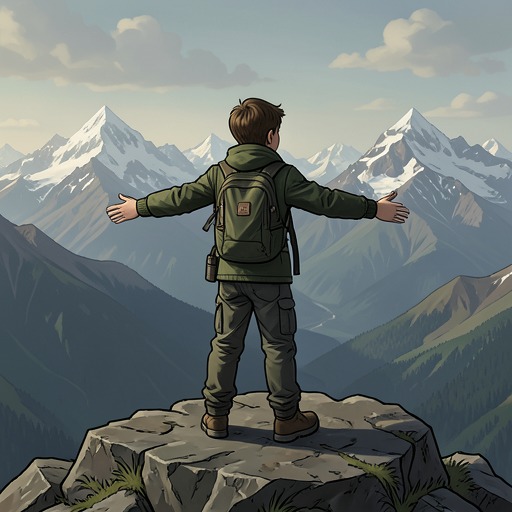
At the end of the seventies, while Milan was in turmoil, Giovanni and Pietro’s mother returned to climbing and travelled west through the Ossola, Valsesia, and Val d’Aosta. The valleys struck her as narrow and dark beside the gentler contours of Veneto and Trentino: damp black rock, streams, and waterfalls seemed to promise unending rain. Climbing high enough to emerge into sunlight, they encountered Monte Rosa above the summer pastures, its glaciers suggesting an Arctic world of permanent winter. She was frightened; Giovanni felt he had passed from the mountains of men into the mountains of giants, and fell in love with the massif at first sight.
The family’s holidays followed Giovanni’s restless exploration of the mountain. Pietro could not later place their first encounter precisely among Macugnaga, Alagna, Gressoney, or Ayas; the family moved between valleys, staying for a couple of weeks in a campsite bungalow or a hostel room. The temporary lodgings never became homely to Giovanni. He changed into his old mountain clothes and spent the short vacation walking, leaving early and returning at night or even the following day. At supper he spoke of chamois, ibexes, bivouacs, starry skies, and snow falling at altitude even in August. His wish that his family could have shared those days made the mountain both his private refuge and something he wanted, without knowing how, to pass on.
A School of Climbing
When Pietro’s father finally began taking him along, their approach to Monte Rosa was methodical rather than leisurely. They drove from Milan to villages at the foot of the massif, past villas, Alpine-style hotels, sixties condominiums, and riverside caravan sites. After coffee at the first open bar, Giovanni shouldered his rucksack and led Pietro onto steep paths beginning behind a church or beyond a wooden footbridge. The glaciers above them caught the morning sun while the valley remained shadowed and wet with dew.
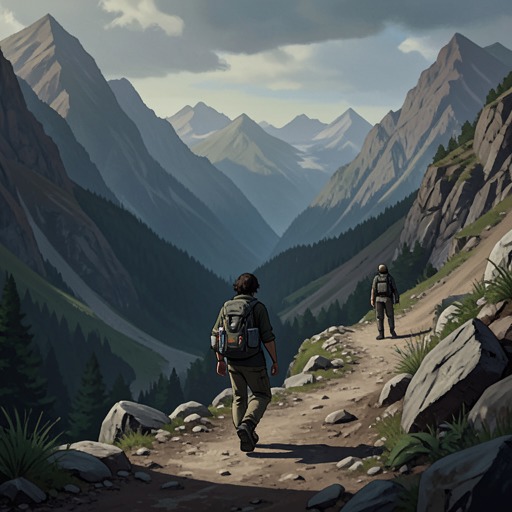
Giovanni had Pietro walk in front and set three rules: establish a pace and keep it without stopping, do not talk, and always take the uphill branch at a fork. Although he puffed more than his son because of smoking and office work, he refused a break for at least an hour. The woods were merely access to the mountain; their climb narrowed to the rhythm of legs, lungs, and hearts. Where wooden crosses, plaques, or small shrines marked deaths, their silence took on the solemnity of a respectful passage.
Higher up, Pietro struggled with nausea brought on by exertion and thin air. Near three thousand metres, as the path gave way to scree, Giovanni moved to the front and seldom checked on him. Reaching a summit brought relief more than triumph. Giovanni would take off his shirt and vest to dry on a cross, then share bread and cheese with Pietro while they looked across the massif at refuges, cable cars, artificial lakes, and roped climbers returning from the Margherita Hut. Over wine and a cigarette, he explained that Rosa came from an old word for ice, and recited the four-thousanders from east to west. Naming the peaks cultivated desire for future climbs: in his eyes, the annual ascents were training for more serious objectives, including the Lyskamm ridge and Dufour’s rock faces.
Repetition, Difficulty, and Records
For Pietro, this annual progression was simultaneously an achievement and an ordeal. He continued to feel sick on glaciers, but grew accustomed to treating that sickness as ordinary—as routine as early starts, freeze-dried refuge food, and crows calling at altitude. He hated the brutal march toward a summit and the vomiting that might follow, yet took pride in climbing above four thousand metres again. Giovanni believed, after consulting a doctor, that Pietro would eventually outgrow his altitude sickness. His felt-tip pen reached the Vincent in 1985 and the Gnifetti in 1986; he imagined that continued practice would allow the pair to attempt more demanding routes within three or four years.
The massif also became an archive of those repeated journeys. Back at the family house, Pietro found Giovanni’s map still pinned to the wall, but decades of marks had transformed it from a trail map into something like a biography. Black, red, and green lines crowded its surface. Pietro worked out the code from a glacier trip on which the three of them had been stopped together: red and green ended where the shared ascent ended, but black continued, marking Giovanni’s later solo climb. Black was Giovanni, red was Pietro, and green was Bruno. The many black-and-green routes stirred Pietro’s jealousy, but also showed him that his father had not spent all those years alone.
Years later, on a barren mountain overlooking his house, Pietro found another record in a weather-worn notebook stored inside a metal box. The summit drew fewer than ten climbers a year, and the logbook accumulated names and brief entries across many years. Among them, in 1997, Pietro recognized his father’s handwriting: Giovanni had recorded climbing up from Grana in three hours and fifty-eight minutes and being in great shape. The water-blurred ink preserved a moment of pride and exertion that Pietro could not have witnessed. He imagined his father hurrying to finish in under four hours, but did not tear out the page; taking it seemed as sacrilegious as removing a stone from the summit.
A Landscape of Memory
Monte Rosa’s significance extends beyond the climbs Giovanni and Pietro made there. An old man Pietro met on quieter routes explained that returning to the same track each year was a way of revisiting his life, as if climbing back through memory. He came from the rice-growing countryside between Novara and Vercelli, where, as a child, he had been told that the water used for drinking, rivers, and flooded fields came from Monte Rosa. The old man connected the distant ice to the sustenance of the plains, and the mountain to a life remembered through repeated visits. His account echoed Pietro’s emerging sense that a landscape could preserve more than the visible traces of a journey.
Giovanni had spoken of glaciers in similar terms. Summer erased memory as it melted snow, he told Pietro, while a glacier was the snow of winters long past, a memory of winter that did not wish to be forgotten. After learning more about his parents’ history, Pietro understood the glacier as an image of what his father carried from earlier life. He came to distinguish between the stranger he had lived with in the city and the father glimpsed on mountain paths: the man walking behind him, the lover of glaciers. That recognition turned the mountain from a backdrop to family outings into a means of understanding a parent whose past had not been fully spoken.
Inheritance and Contrast
Monte Rosa remains present even when Pietro leaves it. Before travelling to Nepal to portray the peoples of Himalayan valleys, he tells Bruno that the Himalayas seem like an intact ancient temple, while his own region looks like the remains of one, with only a few columns standing and its stones scattered. The comparison makes Monte Rosa’s familiar glaciers and ridges feel like part of a world already marked by loss, even as Bruno continues to watch them from his farmstead. Their conversation returns to a remembered day on the ice and to a question about whether that day’s ice has reached the bottom yet, linking physical movement through the glacier to the long, uncertain passage of memory.
Pietro’s later acts of remembrance are rooted in the same landscape. At the house he and Bruno built, he carved Giovanni’s name and dates into the rock wall and added the words, “IN MEMORY IS THE MOST BEAUTIFUL REFUGE.” The inscription turns remembrance into a visible feature of the mountain home, just as Giovanni’s map and summit entry had preserved journeys on paper. Monte Rosa thus joins private experience to durable records: its routes can be repeated, its peaks named, and its ice read as the persistence of winters and family histories that might otherwise disappear.